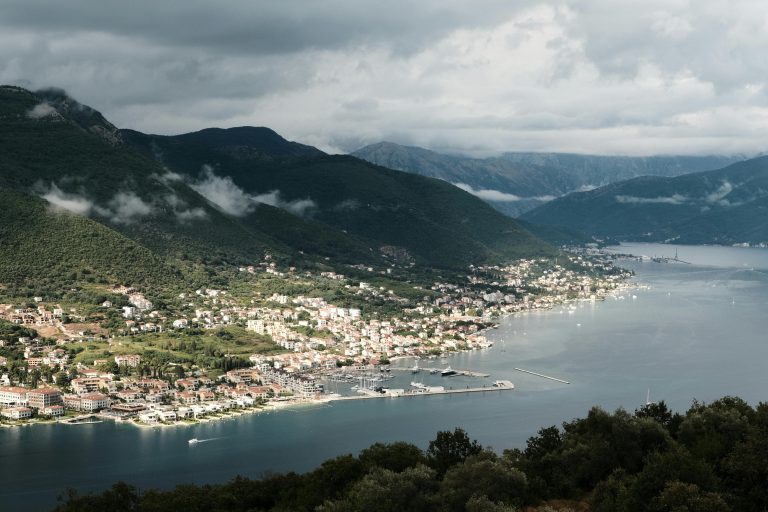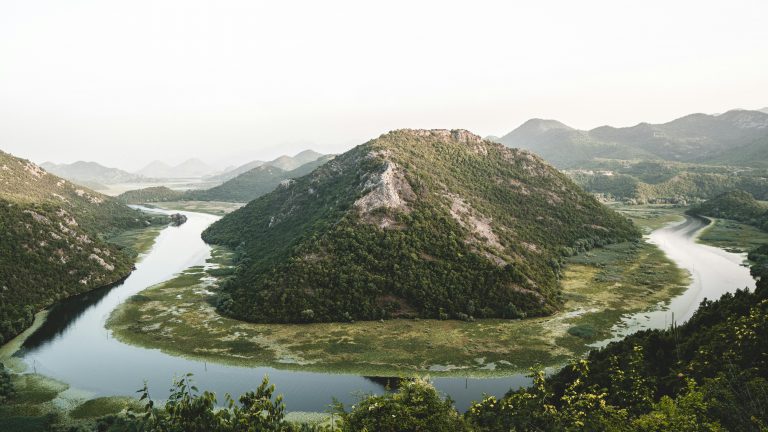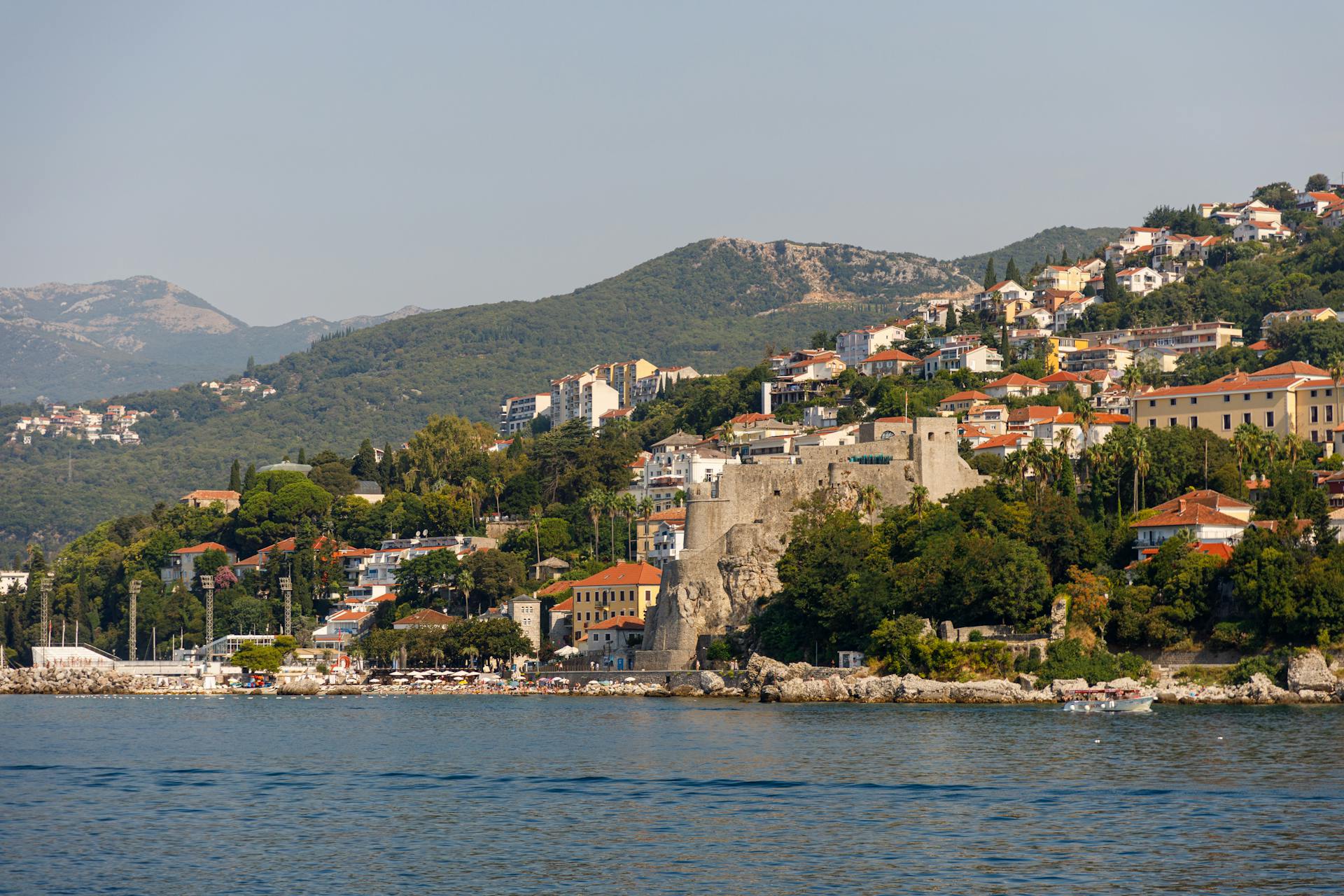
Herceg Novi, Montenegro sits at the western entrance of the Bay of Kotor, where the Adriatic Sea narrows and the mountains begin to rise sharply from the coastline. Known for its fortresses, stair-lined old town, and more than 200 sunny days each year, Herceg Novi offers a layered mix of history, elevation, and coastal life.
Unlike flat resort towns, Herceg Novi climbs. Streets rise in terraces above the water, revealing sudden sea views between red rooftops and cypress trees. Its position between the open Adriatic and the enclosed bay gives it a broader horizon and a distinct atmosphere shaped by light, wind, and geography.
If you’re planning a visit to Herceg Novi Montenegro, here is everything you need to know.
Where Is Herceg Novi Located?
Herceg Novi is located in southwestern Montenegro, just 10 km from the Croatian border and approximately 45 minutes by car from Dubrovnik Airport, depending on border traffic.
It marks the entrance to the Bay of Kotor, positioned between the Luštica Peninsula and the mainland coast. Because of this location, it is often the first Montenegrin town travelers encounter when arriving from Croatia.
Key distances include Dubrovnik Airport at around 45 minutes, Tivat Airport at approximately one hour via the ferry crossing, and Kotor at roughly one hour by coastal road. The Kamenari–Lepetane ferry shortens travel time across the bay if approaching from Tivat or central Montenegro.
A Brief History of Herceg Novi
Founded in 1382 by King Tvrtko I of Bosnia, Herceg Novi was originally established as a strategic trading port intended to strengthen Bosnian access to the Adriatic. At the time, control of coastal outlets meant economic leverage, and this stretch of shoreline offered both a natural harbor and proximity to established maritime routes. Its position at the entrance to the Bay made it commercially valuable for trade in salt, wine, olive oil, and regional goods moving between the Balkan interior and Mediterranean markets.
The town was carefully positioned not only for commerce but also for defense. Whoever controlled this point could monitor movement in and out of the bay, making it militarily significant as regional powers competed for influence along the Adriatic coast. Fortifications were expanded and reinforced almost continuously, reflecting both its value and its vulnerability.
Over the centuries, control shifted repeatedly as empires expanded and contracted across the region. Ottoman, Spanish, Venetian, and later Austro-Hungarian administrations each left physical and administrative traces. Rather than erasing what came before, each period added another layer to the town’s structure, contributing to the complex architectural and cultural identity that defines Herceg Novi today.
Ottoman Period
The Ottoman Empire ruled Herceg Novi from 1482 until 1687, a period that left a lasting imprint on the town’s defensive character and urban structure. When the Ottomans took control, they recognized immediately what earlier rulers had understood — the settlement’s position at the entrance to the Bay of Kotor made it strategically valuable. Controlling Herceg Novi meant monitoring maritime movement into the bay and securing a foothold along an increasingly contested Adriatic coastline.
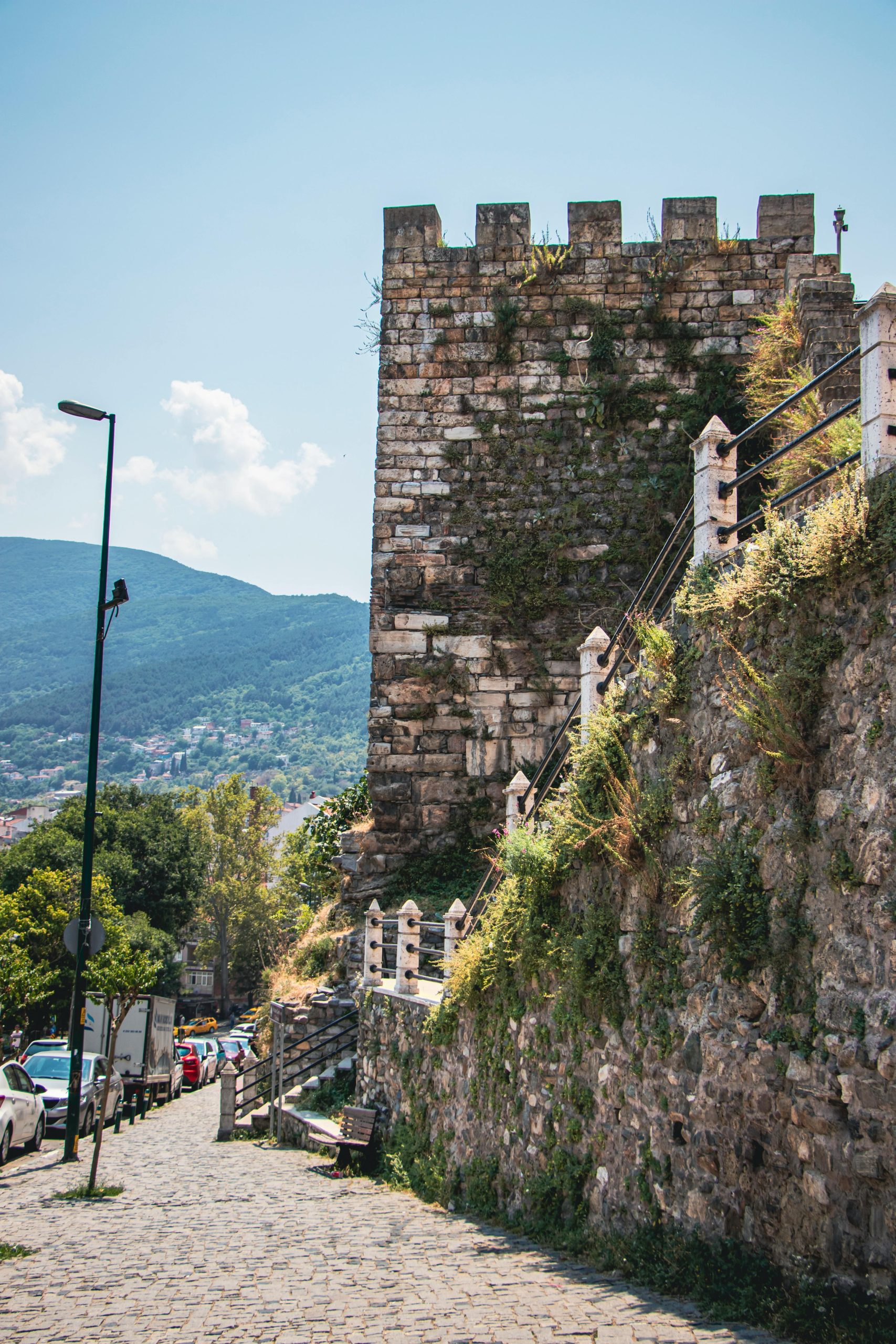
During Ottoman administration, existing fortifications were reinforced and expanded rather than replaced. The most prominent surviving structure from this era is Kanli Kula fortress. Built on elevated ground above the old town, it served both as a defensive stronghold and later as a prison. Its thick stone walls, angular defensive design, and commanding vantage point reflect the military priorities of the period. From its heights, guards could observe ships approaching from the open sea and monitor activity within the settlement below.
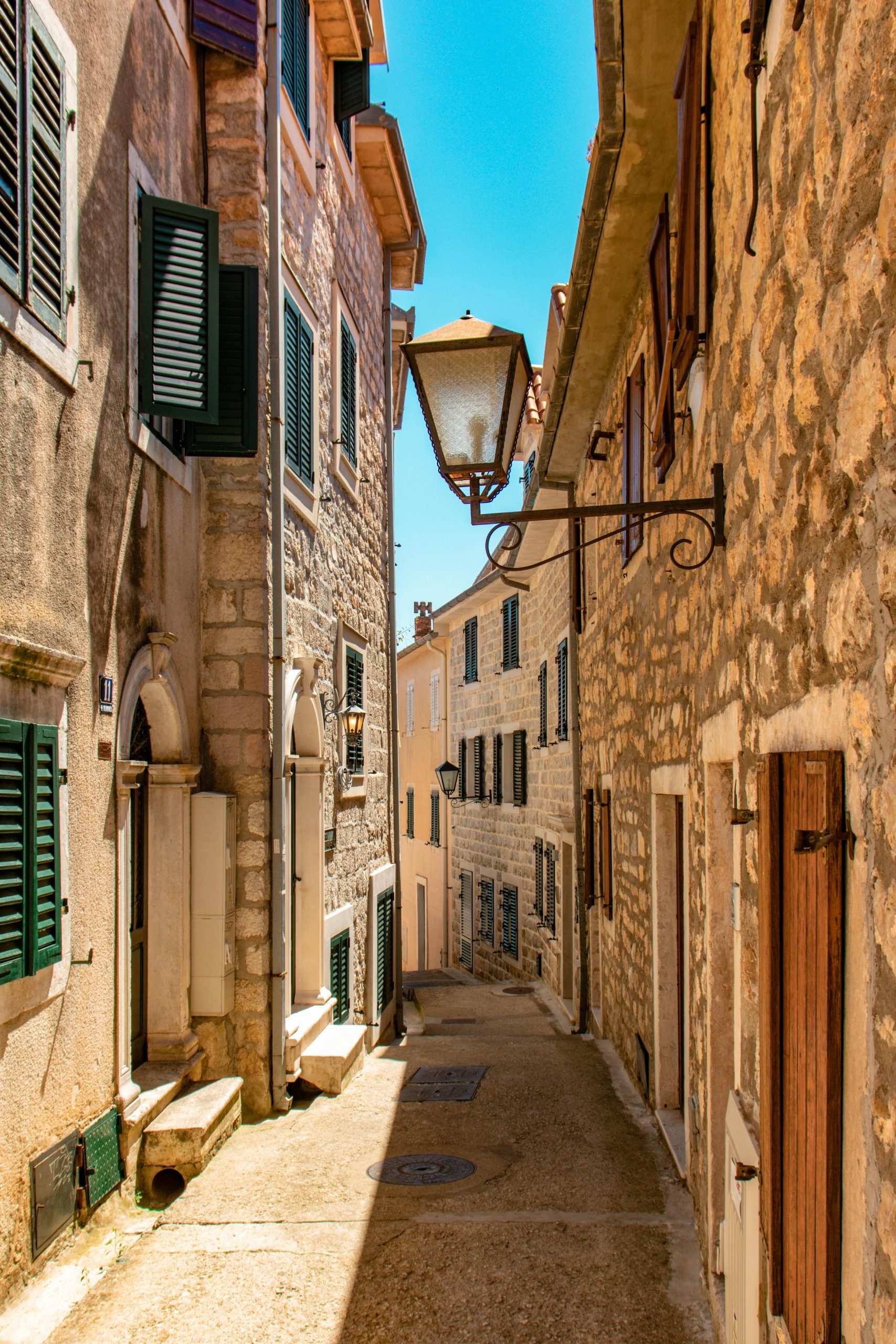
Ottoman influence extended beyond military architecture. Elements of the town’s upper layout — particularly the network of narrow, climbing streets — reflect the defensive logic of the time. Steep passages, tight corners, and layered elevation were not accidental; they made rapid military advance more difficult in the event of attack. Portions of the upper old town still retain this compact, inward-facing structure, contrasting with the more open waterfront areas that developed later.
Although many visible architectural details were altered under subsequent Venetian and Austro-Hungarian control, the Ottoman period established the fortified framework that shaped Herceg Novi’s identity. The emphasis on elevated defensive positions, reinforced stone walls, and controlled access points defined the town’s silhouette and ensured its survival during centuries of regional conflict. Even today, the upper sections of the old town carry the strongest echoes of this era — not as isolated monuments, but as part of the town’s structural foundation.
Spanish and Venetian Rule
In the early 16th century, Herceg Novi experienced one of the more unusual chapters in its history when Spanish forces briefly took control of the town in 1538. Their rule was short-lived — lasting less than a year before Ottoman forces regained control — but it left a permanent mark on the skyline. High above the settlement stands Španjola Fortress, constructed during this period and named after the Spanish presence. Positioned strategically on elevated ground, the fortress was designed to command sweeping views across the entrance to the Bay and toward the open Adriatic. Even today, its location reveals the military logic behind its construction: from this vantage point, any approaching naval movement would have been visible long before reaching the harbor.
Although Spanish control ended quickly, the fortress remained and continued to serve defensive purposes under subsequent rulers. Its relatively austere, functional design reflects military pragmatism rather than decorative ambition. The climb to Španjola today offers not only panoramic views but also insight into the strategic importance Herceg Novi held within Mediterranean power struggles of the 16th century.
Following the Spanish episode, Venetian administration gradually reshaped the town’s economic and architectural character. The Republic of Venice, already deeply embedded in Adriatic trade networks, strengthened Herceg Novi’s maritime connections and reinforced its defensive infrastructure. Venetian influence can be seen in certain stonework details, urban refinements, and the integration of the town into wider commercial routes linking coastal settlements along the eastern Adriatic.
Under Venetian rule, trade intensified, and Herceg Novi became more closely tied to the broader economic currents of the Adriatic basin. Maritime commerce, ship movement, and coastal exchange further defined its role as both a defensive outpost and a functioning port. This period did not erase earlier layers of Ottoman influence but instead added another dimension to the town’s evolving identity, reinforcing its position within regional trade while preserving its strategic coastal defenses.
Austro-Hungarian and Yugoslav Era
Under Austro-Hungarian rule in the late 19th and early 20th centuries, Herceg Novi entered a more structured phase of development. The focus shifted from purely defensive priorities to civic organization and modernization. Roads were improved, administrative systems formalized, and public buildings constructed with a more Central European architectural influence. Facades from this period introduced cleaner lines, decorative balconies, and subtle stylistic elements that contrasted with the heavier stone fortifications of earlier centuries. Infrastructure improvements connected the town more effectively to inland trade routes and neighboring coastal settlements, integrating it into the broader imperial network that stretched across Central and Eastern Europe.
The Austro-Hungarian administration also invested in maritime facilities and coastal management, reinforcing the town’s function as a working port rather than simply a fortified settlement. While the empire’s rule eventually ended following World War I, its emphasis on civic planning left a visible mark on the town’s layout and public spaces.
The 20th century brought another transformation under Yugoslav governance. During this period, Herceg Novi expanded along the coastline, and the waterfront promenade was developed into the Pet Danica walkway that defines the town’s social rhythm today. The neighboring district of Igalo emerged as a center for health and rehabilitation tourism, most notably through the establishment of the Dr. Simo Milošević Institute. Known for its therapeutic mud treatments and physiotherapy programs, the institute attracted visitors from across Yugoslavia and beyond, giving Herceg Novi a reputation not only as a coastal destination but also as a place associated with wellness and long-term stays.
Architecturally, the Yugoslav era introduced functional, modernist structures that differ sharply from the stone textures of the old town. Hotels, apartment blocks, and public buildings reflected mid-20th-century design priorities, emphasizing practicality over ornamentation. Together, the Austro-Hungarian and Yugoslav periods shifted Herceg Novi from a fortified trading outpost to a civic coastal town with infrastructure, public spaces, and a developing tourism identity. The modern Herceg Novi seen today is shaped as much by these administrative and social changes as by the earlier centuries of empire and defense.
Things to Do in Herceg Novi
Herceg Novi rewards slow exploration. Its attractions are best discovered on foot, moving upward through the old town and outward along the coast.
Explore Herceg Novi Old Town
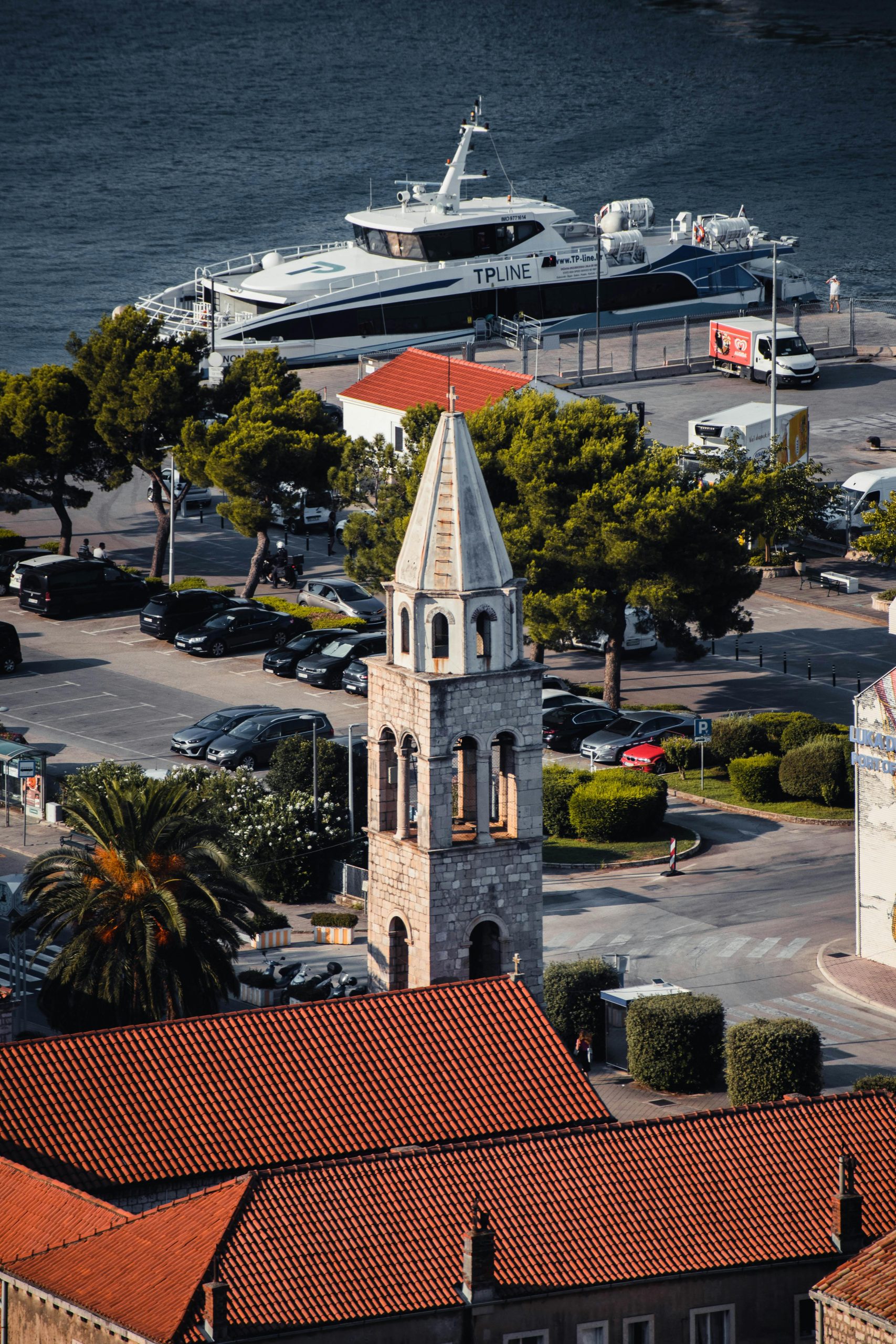
The old town centers around Trg Belavista, home to the Church of St. Michael the Archangel. Completed in the early 20th century, the church blends Byzantine and Romanesque influences. Cafés line the square, and evenings here unfold gradually, particularly in summer when warm temperatures linger after sunset.
From the square, narrow stone streets climb upward toward residential terraces and downward toward the waterfront. The layout feels organic rather than planned, shaped by centuries of adaptation rather than a single architectural vision.
Visit Forte Mare Fortress
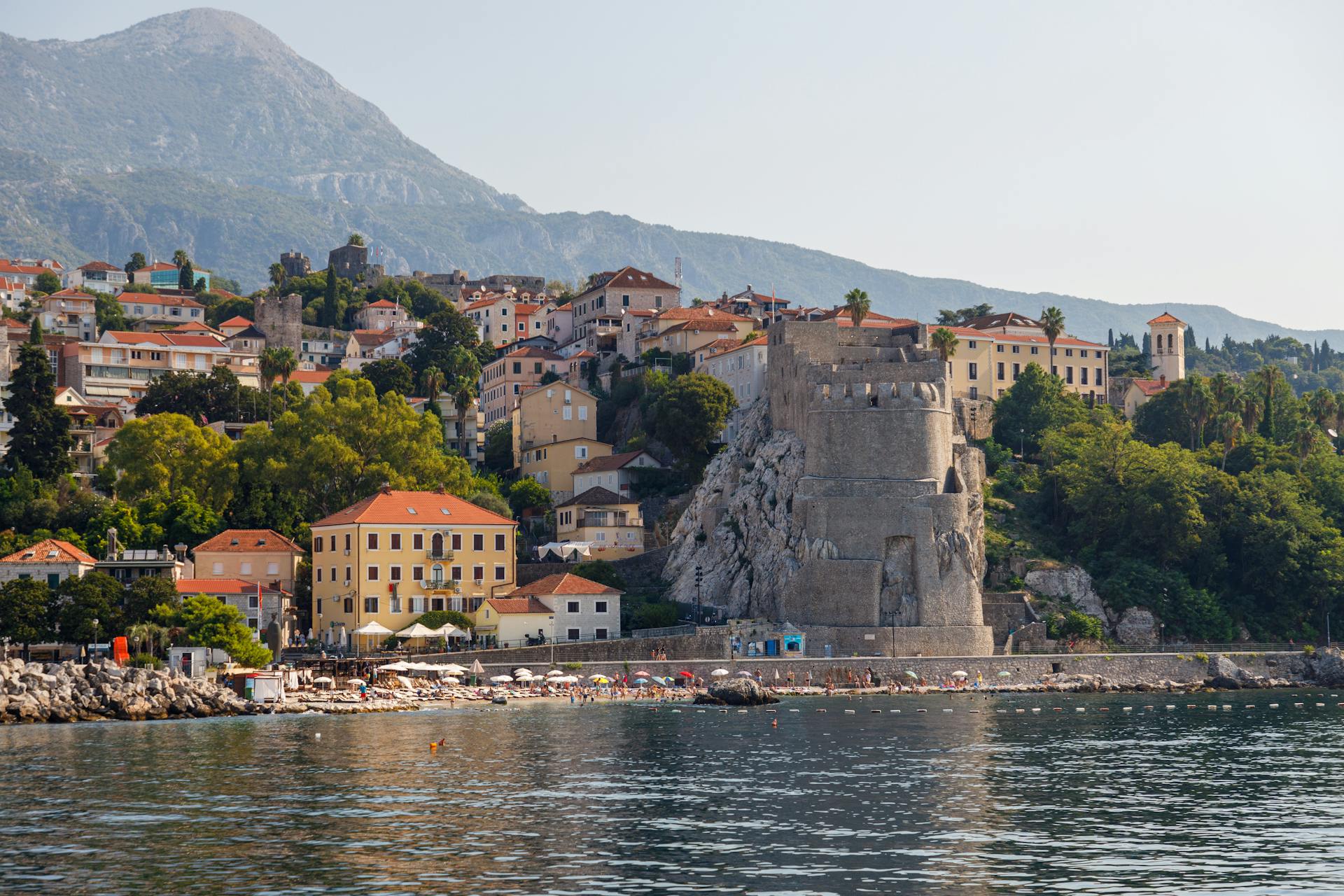
Forte Mare rises directly above the waterfront, forming one of the most recognizable landmarks in Herceg Novi. Originally constructed in the late 14th century during the reign of King Tvrtko I, the fortress has been expanded and modified by successive rulers, each reinforcing its defensive role at the entrance to the Bay. Its position was carefully chosen: from here, defenders could observe approaching ships from the open Adriatic and maintain control over maritime access to the sheltered waters beyond.
The structure itself reflects layers of adaptation. Thick stone walls, angular bastions, and elevated terraces reveal its military origins, while later modifications introduced by the Ottomans and Venetians strengthened its strategic capabilities. Unlike some coastal fortresses designed primarily as symbolic displays of power, Forte Mare was functional — a working defensive installation integral to the town’s survival.
Today, the fortress serves a very different purpose. During the summer months, its interior transforms into an open-air cinema and cultural venue, hosting film screenings, concerts, and events beneath the night sky. Stone seating terraces face outward toward the sea, creating an atmosphere that blends history with contemporary use. From its upper levels, the Adriatic stretches westward in uninterrupted blue, with views extending toward the Croatian coastline and the open horizon. As the sun sets, the light softens across the water, making Forte Mare not only a historical monument but also one of the most compelling viewpoints in Herceg Novi.
Climb Kanli Kula
Kanli Kula, meaning “Bloody Tower” in Turkish, was constructed during the Ottoman period in the 16th century and formed a central part of Herceg Novi’s defensive network. Its name is often associated with its later use as a prison, when the fortress held detainees within its thick stone walls. Positioned high above the old town, Kanli Kula was designed both for surveillance and defense, commanding clear views of the entrance to the Bay and the surrounding coastline.
The fortress was engineered with military precision. Its elevated ramparts allowed guards to monitor maritime activity, while the interior courtyards and enclosed chambers served practical defensive and administrative purposes. Over time, successive administrations modified and reinforced the structure, but its Ottoman foundations remain evident in its heavy masonry and commanding placement.
Today, Kanli Kula has been transformed into one of the most atmospheric cultural venues on the Montenegrin coast. The interior courtyard now functions as an open-air amphitheater, hosting concerts, theatrical performances, and summer festivals. Stone seating rises in tiers beneath open sky, and the acoustics created by the surrounding walls give performances a distinctive character. From the upper terraces, panoramic views stretch across the Bay of Kotor toward the Croatian coastline, with sunsets casting warm light across the fortress walls. Kanli Kula stands as both a reminder of Herceg Novi’s defensive past and a living space woven into the town’s contemporary cultural life.
Walk the Pet Danica Promenade
The Pet Danica promenade is the coastal spine of Herceg Novi, stretching for several kilometers along the shoreline and linking the old town with the district of Igalo. Named after the Danica sisters, local heroines from World War II, the walkway traces what was once a narrow coastal path and sections of former railway line, gradually developed into the wide pedestrian route seen today.
Running parallel to the sea, the promenade passes small beaches, stone bathing platforms, cafés, seasonal kiosks, and shaded benches tucked beneath pine trees. In the early morning, it belongs to joggers and swimmers heading for a quick dip before the heat builds. By late afternoon, families and older residents gather for slow walks, pausing to talk or watch fishing boats move across the bay. In the evening, particularly during summer, the promenade becomes a social corridor where locals and visitors alike follow the same unhurried rhythm along the water.
Unlike highly curated resort promenades designed primarily for tourism, Pet Danica feels embedded in everyday life. It connects neighborhoods rather than isolating them, serving as both a transport link and a meeting place. The scent of salt air mixes with espresso from waterfront cafés, and the sound of conversation blends with the steady movement of waves against the shore. Walking this stretch offers not just coastal views, but a glimpse into the daily cadence of Herceg Novi itself.
Visit Sava Monastery
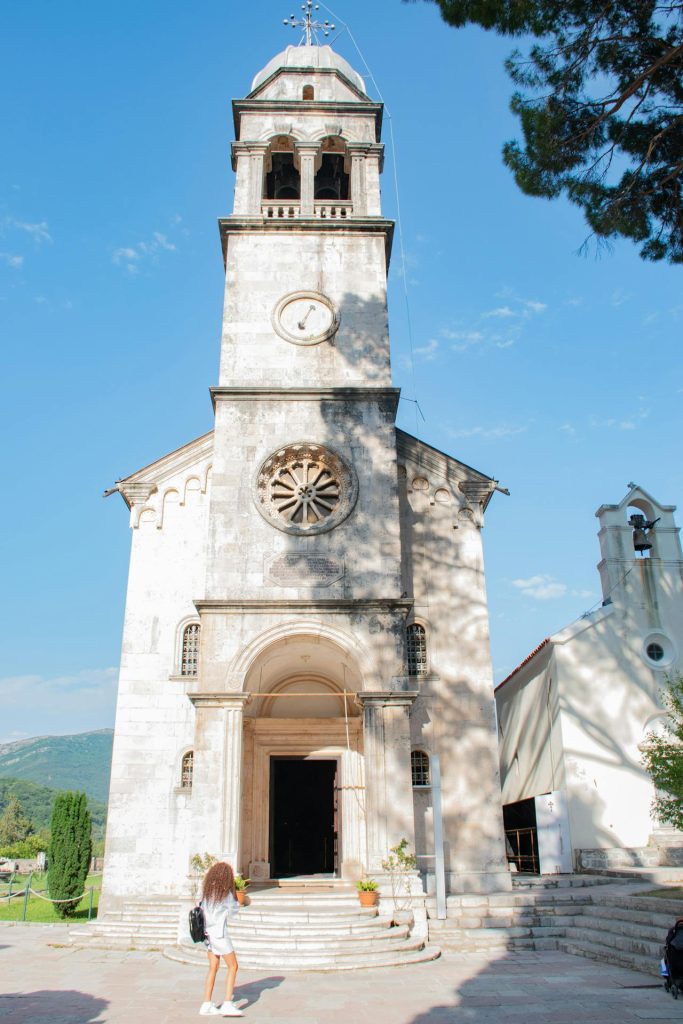
Located just east of Herceg Novi Old Town, Savina Monastery is one of the most significant religious landmarks in Herceg Novi, Montenegro. The complex dates largely to the 17th and 18th centuries, although monastic life in this area is believed to have existed even earlier. Set slightly above the coastline, Savina Monastery overlooks the Bay of Kotor and occupies a peaceful position between sea and hillside, making it both a spiritual and scenic highlight for visitors exploring Herceg Novi.
The monastery complex includes three separate churches built in different periods, each reflecting architectural influences from the time of construction. The largest church, dedicated to the Dormition of the Theotokos, combines Orthodox tradition with subtle Baroque elements introduced during Venetian influence along the coast. Inside, visitors can see a finely carved iconostasis and religious icons that have been carefully preserved over centuries. Savina Monastery remains an active Orthodox monastery, not merely a historical monument, and continues to hold religious services while safeguarding important manuscripts and sacred artifacts that survived periods of Ottoman rule and regional conflict.
The grounds of Savina Monastery are shaded by tall cypress and pine trees, creating a tranquil atmosphere that contrasts with the livelier waterfront promenade below. Stone pathways connect the churches and courtyards, offering shaded seating areas and quiet corners for reflection. From the monastery terrace, panoramic views open across the entrance of the Bay of Kotor, with the Luštica Peninsula visible in the distance.
Herceg Novi Beaches
Herceg Novi beaches are primarily pebble or rocky, with concrete swimming platforms typical of the Montenegrin coast. Savina Beach is scenic and close to town. Žanjic Beach, accessible by boat, offers a more secluded setting, while Mirista Beach provides clear water and a quieter atmosphere.
The water is deep and exceptionally clear, making it ideal for swimming. Because the town faces west, sunsets over the sea are particularly striking. Herceg Novi does not have long sandy beaches, but its swimming spots are clean and well integrated into the coastal landscape.
When Is the Best Time to Visit Herceg Novi?
Herceg Novi benefits from one of Montenegro’s mildest climates. Spring offers warm temperatures, blooming mimosa trees, and moderate visitor numbers. The Mimosa Festival in February marks the symbolic beginning of the season.
Summer is lively but not overwhelming. Evenings remain warm, and sea temperatures are ideal for swimming. September is often considered one of the best months to visit, with warm water and fewer crowds. Winter is quiet, with many seasonal businesses closed, but the climate remains relatively mild compared to inland areas.
How to Get to Herceg Novi
From Dubrovnik Airport, Herceg Novi is approximately 45 minutes by car, depending on border traffic. From Tivat Airport, the journey takes about one hour. Using the Kamenari–Lepetane ferry shortens the drive across the bay.
Herceg Novi is accessible by car, bus, or private transfer and serves as a practical entry point when traveling between Croatia and Montenegro.
Is Herceg Novi Worth Visiting?
Herceg Novi is worth visiting for its combination of fortresses, elevated sea views, and layered architectural history. It offers fortress panoramas over open water, a vertical old town shaped by staircases, a sunset-facing coastline, and religious landmarks such as Savina Monastery.
Rather than presenting a single preserved medieval image, Herceg Novi reveals centuries of change embedded in stone and street layout. For travelers interested in history, coastal scenery, and a town shaped by geography as much as architecture, Herceg Novi offers depth and perspective.
Frequently Asked Questions About Herceg Novi
How many days do you need in Herceg Novi? One full day allows you to explore the old town, visit the fortresses, walk the promenade, and see Savina Monastery. Two days provide time for beaches and nearby boat excursions.
Can you visit Herceg Novi from Dubrovnik? Yes. Herceg Novi is approximately 45 minutes from Dubrovnik Airport by car, making it an easy cross-border trip.
Does Herceg Novi have sandy beaches? No. Most beaches are pebble, rocky, or concrete platforms typical of the Montenegrin coastline.
Is Herceg Novi expensive? Prices are generally moderate compared to major Mediterranean destinations, with a range of accommodation and dining options available.